
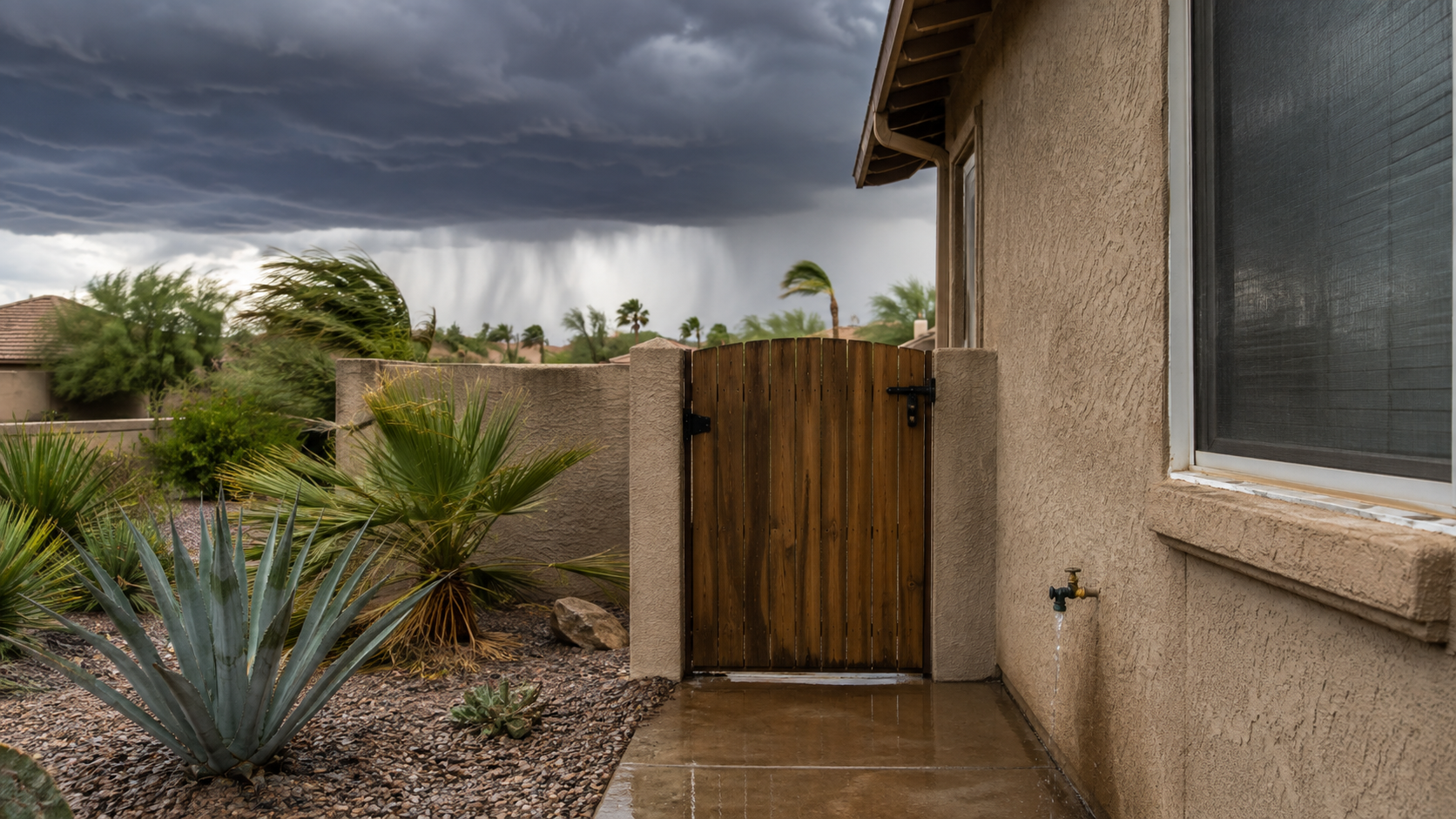
Arizona monsoon storms can turn a small home-maintenance problem into a much bigger repair surprisingly quickly.
A loose gate that seems harmless on a calm day may start shifting in strong winds. Cracked exterior caulking can allow wind-driven rain into areas that normally stay dry. Worn weather stripping may let water, dust, and hot air inside. A small ceiling stain could be the first visible clue that moisture is already finding a way into your home.
August is a good time for Arizona homeowners to walk around the property and look for these small warning signs before the next round of heat, wind, dust, and monsoon rain makes them worse.
Here are 10 areas worth checking.
1. Check Gates for Loose Hinges, Latches, and Movement
Start with your pedestrian gates, driveway gates, and other exterior access points.
Arizona gates take a beating from heat, dust, daily use, and strong seasonal winds. A gate that has become slightly loose or misaligned may move significantly more during a storm.
Look for:
- Loose hinges
- Missing or loose bolts
- Sagging gate panels
- Latches that no longer line up
- Grinding or scraping
- Excessive movement in the wind
- Cracked or damaged mounting points
- Automatic gates that hesitate or reverse
Open and close the gate several times and watch how it moves.
A properly operating gate should move smoothly and close securely without requiring excessive force.
If you have an automatic gate, also check that the operator, sensors, and access controls are responding normally.
Gecko Service Pros provides garage door and gate repair throughout the Phoenix Valley and works with residential and commercial gate systems that may be affected by Arizona heat, dust, and monsoon conditions.
2. Inspect Exterior Caulking Around Windows and Doors
Exterior caulking helps seal small gaps where different building materials meet.
Over time, Arizona’s intense heat and sun can cause caulk to shrink, crack, separate, or become brittle.
Walk around your home and inspect areas around:
- Window frames
- Exterior doors
- Utility penetrations
- Trim
- Pipes entering the home
- Exterior vents
- Small gaps in siding or stucco transitions
Look for visible cracks or sections where caulk has pulled away from the adjoining material.
Even a small opening can become more significant when rain is driven against the house by strong winds.
If you find damaged caulking, repair it before repeated storms have an opportunity to push moisture into the opening.
3. Examine Garage Door Weather Stripping
Your garage door is another large exterior opening that should be checked before monsoon weather becomes more active.
Close the garage door and inspect the bottom and sides from inside.
Look for:
- Daylight underneath the door
- Cracked rubber or vinyl
- Missing pieces
- Hardened weather stripping
- Gaps along the sides
- Sections that no longer contact the floor
A damaged garage door seal can allow dust, hot air, pests, and storm water into the garage.
Gecko Service Pros specifically recommends checking garage door weather seals before monsoon season and notes that Arizona heat can cause these materials to deteriorate faster. Their guide to garage door weather seal replacement in Arizona explains what homeowners should look for.
House Pros Now also features Gecko Service Pros’ garage door and gate services across the Phoenix Valley.
4. Look for Minor Roof-Edge and Fascia Problems
You do not need to climb onto your roof to perform a useful visual inspection.
In fact, homeowners should avoid climbing onto steep, hot, wet, or damaged roofing.
Instead, stand safely on the ground and look at the visible roof edges.
Watch for:
- Loose-looking fascia
- Damaged trim
- Missing pieces near roof edges
- Sagging areas
- Loose gutters
- Gaps near eaves
- Debris collecting along drainage areas
- Previous repairs that appear to be separating
Small problems around the roof edge can become more noticeable when strong winds and heavy rain arrive.
If something looks loose or damaged, have it inspected rather than waiting for the next storm to test it.
5. Check Exterior Lights, Cameras, and Fixtures
Take a walk around your home and gently inspect exterior fixtures that are safely within reach.
These may include:
- Porch lights
- Security cameras
- Doorbells
- House-number signs
- Decorative fixtures
- Outdoor electrical covers
- Wall-mounted accessories
Look for fixtures that wobble, tilt, or appear to be pulling away from the wall.
Also check whether protective covers are intact.
Strong winds can worsen loose mounting hardware, while rain can create additional concerns around damaged exterior electrical fixtures.
Do not attempt electrical repairs unless you are qualified to do so. If wiring, electrical boxes, or damaged connections are exposed, have an electrician address the problem.
6. Repair Dripping Exterior Faucets
A dripping hose bib may not seem connected to monsoon preparation, but it is worth fixing while inspecting the property.
Look around exterior faucets for:
- Constant dripping
- Moisture around the connection
- Mineral buildup
- Loose handles
- Damaged hoses
- Water stains on exterior walls
- Damp soil beneath the faucet
A small plumbing leak can create persistent moisture next to the house, making it harder to distinguish normal leakage from storm-related water intrusion.
It can also waste water during an Arizona summer when outdoor water usage may already be elevated.
If the faucet continues leaking after normal tightening or requires work behind the wall, consider having a plumber inspect it.
7. Investigate Existing Drywall Stains or Damage
Do not ignore a small ceiling stain just because it is currently dry.
Previous moisture damage may become active again during monsoon rain.
Inside your home, look for:
- Yellow or brown ceiling stains
- Bubbling paint
- Peeling drywall
- Soft areas
- Cracks around previous repairs
- Swollen baseboards
- Musty odors
Take a photo of any questionable area before the next storm.
After heavy rain, compare the area with your photo. If the discoloration spreads, becomes wet, or changes shape, moisture may still be entering the home.
Finding the source is more important than simply painting over the stain.
8. Check Exterior and Interior Door Alignment
Doors can tell you quite a bit about how a home is behaving.
Check exterior doors, garage-entry doors, and frequently used interior doors.
Look for doors that:
- Suddenly rub against the frame
- Are difficult to latch
- Have large gaps around the edges
- No longer sit squarely in the opening
- Allow visible daylight through the perimeter
- Have loose hinges
- Move when the wind blows
Sometimes the solution is as simple as tightening a loose hinge screw.
Other times, changing door alignment can point to swelling, settlement, frame movement, or previous moisture exposure.
Addressing a minor alignment issue early can also help weather stripping seal more effectively during wind-driven rain.
9. Inspect Garage Doors for Loose or Worn Components
Monsoon preparation should include the garage door itself, not just the weather seal.
Operate the door and pay attention to its movement.
Watch and listen for:
- Shaking
- Jerking
- Grinding
- Squeaking
- Loose-looking hardware
- Damaged rollers
- Door sections that look crooked
- Difficulty opening or closing
- An opener that sounds strained
- Safety sensors that behave inconsistently
Arizona heat and dust already place additional wear on garage door components. Seasonal storms can add wind, moisture, and debris to that environment.
Gecko Service Pros specializes in garage doors and gates and offers installation, opener replacement, spring repair, preventative maintenance, same-day repairs, and emergency service throughout the Phoenix Valley.
You can also view the Gecko Service Pros profile on House Pros Now for additional company information.
A safety note
Do not attempt to adjust garage door springs or tensioned cables yourself.
These components can store considerable energy and should be handled by an experienced garage door technician.
10. Walk the Property and Look for Anything Loose
Finish your inspection by simply walking around the entire property.
Ask yourself:
What could move if a strong gust hit it tonight?
Look for:
- Loose fence sections
- Patio items
- Decorative signs
- Hanging decorations
- Lightweight furniture
- Damaged screens
- Loose trim
- Trash cans
- Garden tools
- Outdoor storage
- Temporary shade materials
Move or secure anything that could become airborne.
Also look at trees and landscaping from a safe distance. Large broken branches, dead limbs, or obviously unstable vegetation near buildings may require professional attention.
The goal isn’t to predict every possible storm problem.
It’s to remove obvious weak points before wind and rain find them for you.
Your August Arizona Home Repair Checklist
Before the next monsoon storm, spend 20 or 30 minutes walking around your home and checking these areas:
1. Gates
Check hinges, latches, alignment, and automatic operators.
2. Exterior caulking
Look around windows, doors, vents, and penetrations.
3. Weather stripping
Inspect garage doors and exterior doors for gaps.
4. Roof edges
Look from the ground for loose trim, fascia, and obvious damage.
5. Exterior fixtures
Check lights, cameras, signs, and covers.
6. Outdoor faucets
Look for dripping, corrosion, or persistent moisture.
7. Drywall
Document existing stains and check them again after rain.
8. Door alignment
Look for rubbing, gaps, and loose hinges.
9. Garage doors
Listen and watch for abnormal movement or worn components.
10. Loose outdoor items
Secure anything that could move during high winds.
This kind of inspection is simple, but it can help you spot developing problems before they become emergency repairs.
Small Repairs Can Become Bigger After a Storm
One of the easiest mistakes homeowners make is postponing a repair because the problem still seems manageable.
A gate still closes, even though the hinge is loose.
A weather seal has a crack, but only a little daylight comes through.
A ceiling stain hasn’t changed in months.
A garage door squeaks, but it still opens.
Those may all be easy to ignore during dry weather.
Monsoon wind and rain can change the situation quickly.
The better approach is to use warning signs as an opportunity to investigate early.
When Should You Call a Professional?
Some August maintenance jobs are reasonable DIY projects.
A homeowner may be comfortable securing lightweight patio items, documenting drywall stains, replacing simple weather stripping, or checking accessible caulking.
Professional help is more appropriate when you find:
- A garage door spring or cable problem
- A gate that is unstable or severely misaligned
- Automatic gate problems
- Exposed electrical wiring
- Significant roof damage
- Active water intrusion
- Widespread drywall moisture
- Plumbing leaks inside walls
- Structural movement
- Repairs requiring work at dangerous heights
If you’re unsure whether a repair is cosmetic or potentially serious, an inspection can help you understand what you’re dealing with before the next storm.
Prepare Your Arizona Home Before the Next Monsoon
Arizona homeowners cannot control the heat, wind, dust, and monsoon rain.
But you can control how prepared your property is when those conditions arrive.
A short August inspection can reveal the loose hinge, cracked seal, damaged caulking, leaking faucet, or small water stain that might otherwise go unnoticed until the weather makes it worse.
Start with the simple things you can safely inspect yourself, then bring in the appropriate professional when a repair involves specialized equipment, electrical work, roofing, plumbing, structural concerns, or tensioned garage door components.
For more Arizona home-maintenance information and local service guides, visit the House Pros Now blog.
You can also read more about Gecko Service Pros’ garage door and gate services or browse the Garage Door Repair & Suppliers section on House Pros Now.
Need Garage Door or Gate Help Before Monsoon Weather?
Gecko Service Pros provides residential and commercial garage door and gate service across Phoenix, Scottsdale, Mesa, Chandler, Gilbert, Tempe, and surrounding Arizona communities. The company offers garage door installation, opener replacement, spring repair, custom gates, gate automation, preventative maintenance, same-day repairs, and 24/7 emergency service.
Visit the official Gecko Service Pros website or view the Gecko Service Pros profile on House Pros Now.
Gecko Service Pros
Phone: (480) 805-2000
Email: info@geckoservicepros.com
Service Area: Phoenix Valley and surrounding Arizona communities