
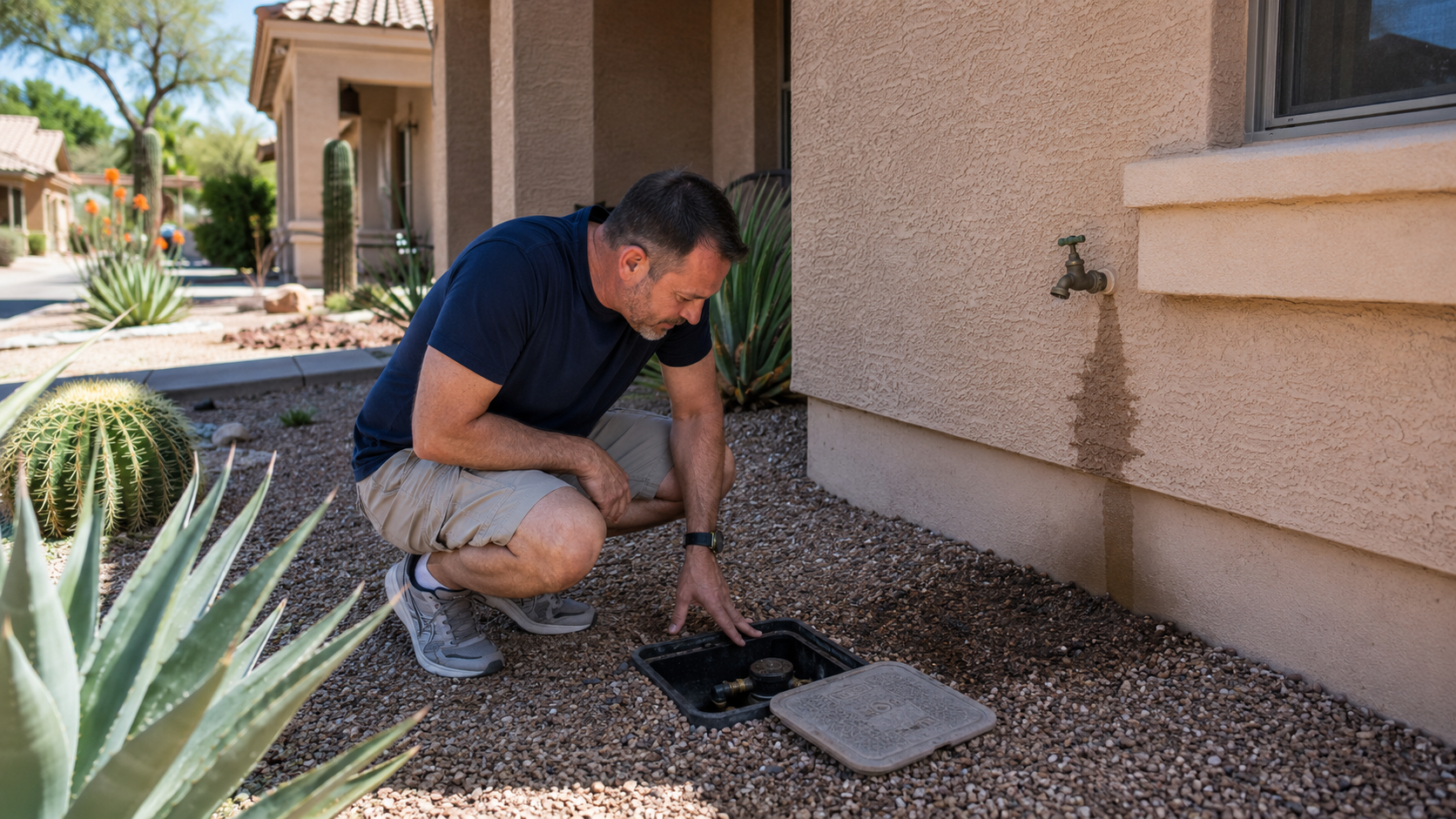
Arizona summers put your home’s plumbing system under conditions that can make hidden leaks particularly frustrating.
While an obvious dripping faucet or burst pipe is easy to notice, many plumbing leaks develop behind walls, beneath floors, around toilets, underground, or within irrigation systems. A small leak can continue wasting water long before you see obvious damage.
The good news is that homeowners can perform several simple checks to look for trouble.
If your water bill suddenly climbs, you hear water running when everything is turned off, or you notice unexplained damp or warm areas around your property, it may be time to investigate.
Here are some of the most useful ways Arizona homeowners can spot a possible hidden plumbing leak.
1. Compare Your Recent Water Bills
One of the easiest places to start is your water bill.
Your household’s water usage naturally changes from month to month, especially during an Arizona summer when landscaping and outdoor water use may increase.
However, a significant increase that you cannot explain deserves attention.
Compare your current usage with:
- The previous month
- The same period last year
- Your typical summer usage
- Recent changes in household occupancy
- Changes in irrigation schedules
- Pool filling or other unusually high water use
If your habits have stayed about the same but your water consumption keeps increasing, a hidden leak could be responsible.
Do not automatically assume the problem is inside the house. Irrigation lines, outdoor faucets, pool-related plumbing, and underground supply lines can also waste substantial amounts of water.
For homeowners who need professional help tracking down unexplained water loss, Done Right Plumbing provides leak detection and plumbing repair services throughout Mesa and surrounding Arizona communities.
2. Perform a Simple Water Meter Test
Your home’s water meter can be one of the best tools for identifying a leak you cannot see.
Choose a time when nobody needs to use water for a little while.
Turn off:
- Faucets
- Showers
- Washing machines
- Dishwashers
- Ice makers if practical
- Irrigation systems
- Any other appliances or fixtures that may use water
Make sure toilets are not flushing and nobody is using water inside or outside the house.
Then check the water meter.
Take a photo or write down the meter reading. Wait for a period without using any water and check it again.
If the meter continues registering water use when everything is supposed to be off, there may be a leak somewhere in the plumbing system.
At that point, determining where the leak is located becomes the next step.
3. Check Every Toilet for Silent Leaks
A toilet can waste water without making the problem obvious.
Sometimes you will hear a toilet running continuously. Other times, water slowly leaks from the tank into the bowl without producing much noise at all.
Try this simple toilet test
Remove the toilet tank lid and add a few drops of food coloring to the tank.
Do not flush.
Wait approximately 15 to 30 minutes.
If colored water appears in the toilet bowl without flushing, water is leaking from the tank into the bowl.
Common causes may include a worn flapper, seal problem, fill valve issue, or another component inside the toilet.
Also listen for toilets that periodically refill even when nobody has used them. That repeated refill cycle can be another indication that water is escaping somewhere.
If a toilet continues running or leaking after basic adjustments, have the problem repaired rather than allowing it to waste water throughout the summer.
House Pros Now has more information about Done Right Plumbing’s Mesa and Phoenix Valley plumbing services, including help with toilets, leaks, drains, water heaters, and general plumbing repairs.
4. Inspect Your Irrigation System
During an Arizona summer, irrigation can make leak detection trickier because outdoor water use naturally increases.
A broken drip line or underground irrigation leak can sometimes operate for weeks before a homeowner notices.
Walk your property while the irrigation system is running.
Look for:
- Unusually wet soil
- Water pooling around plants
- Areas that stay muddy
- Water spraying where it should not
- Broken emitters
- Damaged irrigation tubing
- Water flowing into the street
- One unusually green patch of landscaping
- Soggy areas between irrigation cycles
Then inspect the yard again when irrigation has been off for several hours.
A section that remains unusually wet may indicate water is escaping below the surface.
If your water bill suddenly rises during summer, checking the irrigation system should be near the top of your list.
5. Look Under Sinks and Around Plumbing Fixtures
Not every hidden leak is completely invisible.
Some begin in cabinets or corners people rarely inspect.
Take a flashlight and look underneath:
- Kitchen sinks
- Bathroom sinks
- Laundry sinks
- Water filtration systems
- Dishwasher connections
- Refrigerator water connections
Watch for moisture around supply lines, shutoff valves, drains, and cabinet flooring.
Other clues include:
- Swollen cabinet materials
- Discoloration
- Peeling finishes
- Musty odors
- Rust or corrosion
- Mineral deposits
- Damp belongings stored under the sink
Run the faucet while you inspect the plumbing underneath. Some drain leaks only appear when water is actively flowing.
6. Watch for Damp Walls, Ceilings, or Baseboards
Water does not always appear directly beneath the plumbing problem.
It can travel along framing, drywall, pipes, or other building materials before becoming visible.
Pay attention to unexplained:
- Ceiling stains
- Wall discoloration
- Bubbling paint
- Peeling paint
- Soft drywall
- Swollen baseboards
- Warped flooring
- Damp carpet
- Musty smells
A stain that grows larger or repeatedly comes back after drying deserves professional attention.
Leaks inside walls or ceilings can damage building materials before homeowners realize how much water is involved.
Done Right Plumbing’s House Pros Now profile lists residential and commercial plumbing service along with water-damage-related support. Homeowners can view Done Right Plumbing on House Pros Now and request service directly.
7. Pay Attention to Warm Spots on the Floor
A strangely warm section of flooring can be an important warning sign.
If a hot-water pipe beneath a slab develops a leak, heat from the escaping water may sometimes be noticeable through tile or other flooring.
Walk through the home and pay attention to areas that feel unusually warm without an obvious explanation.
Possible warning signs of an under-floor plumbing problem include:
- One warm patch that stays in the same location
- Damp flooring
- Changes in grout or flooring
- Unexplained sounds of running water
- Increased water usage
- Reduced hot-water availability
A warm floor does not automatically mean you have a slab leak, but combined with other symptoms it is worth investigating.
Do not start removing flooring or attempting to access plumbing beneath a slab yourself. Professional leak detection can help determine the source before unnecessary demolition begins.
8. Listen for Running Water When Everything Is Off
Sometimes your ears detect a plumbing problem before your eyes do.
During a quiet part of the day, turn off faucets, appliances, irrigation, and other known water sources.
Then listen.
You may hear:
- Hissing
- Dripping
- Trickling
- Water moving through pipes
- A toilet periodically refilling
Try listening near bathrooms, kitchens, laundry rooms, water heaters, and walls containing plumbing.
If you hear water movement when nothing should be using water, combine that observation with a water meter check.
If the meter also indicates continued usage, there is a stronger reason to suspect a leak.
9. Notice Unexpected Drops in Water Pressure
Low water pressure can have several causes, and a hidden leak is only one possibility.
Still, a noticeable and unexplained change should not be ignored.
You might notice:
- A shower suddenly feels weaker
- Faucets do not produce their normal flow
- Multiple fixtures lose pressure
- Water pressure changes dramatically throughout the day
If only one faucet has poor pressure, the problem may be isolated to that fixture.
When pressure changes throughout the house, however, the issue may involve a larger portion of the plumbing system.
A plumber can help determine whether the cause is a leak, valve problem, supply issue, mineral buildup, pressure regulator issue, or something else.
For more information about the company, House Pros Now also features Done Right Plumbing as a family-owned Mesa plumbing service.
10. Walk the Exterior of Your Home
Some plumbing leaks reveal themselves outside.
Walk around the perimeter of your home and look near exterior walls, hose connections, irrigation lines, and areas where plumbing enters the structure.
Watch for:
- Damp soil next to the foundation
- Standing water with no obvious source
- Green growth in an otherwise dry area
- Water stains on exterior walls
- Dripping hose bibs
- Wet spots near plumbing lines
- Erosion caused by persistent water flow
During an Arizona summer, unexplained wet ground can be especially noticeable because surrounding soil often dries quickly.
If one area remains damp while everything around it is dry, investigate further.
A Quick Hidden-Leak Checklist
If you suspect a plumbing leak, work through these checks:
1. Review your water bill.
Look for unexplained increases in consumption.
2. Shut off water use and check the meter.
Continued movement can indicate water is escaping somewhere.
3. Test your toilets.
Look and listen for water passing from the tank into the bowl.
4. Inspect irrigation.
Check for broken lines, pooling water, and unusually damp areas.
5. Look under sinks.
Inspect supply lines, drain connections, and shutoff valves.
6. Check walls and ceilings.
Look for stains, moisture, soft drywall, or peeling paint.
7. Feel for unusual warm spots.
Pay attention to unexplained heat beneath flooring.
8. Listen when the house is quiet.
Running-water sounds with fixtures off deserve investigation.
9. Watch your water pressure.
Take note of sudden or persistent changes.
10. Inspect outside.
Look for unexplained wet areas around the home and landscaping.
When Should You Call an Arizona Plumber?
Some small plumbing problems are obvious and easy to address. Others require professional equipment and experience to locate without unnecessarily opening walls or floors.
Consider calling a plumber when:
- Your meter shows water use with everything turned off
- Your water bill keeps climbing without explanation
- You hear water running behind a wall
- A ceiling or wall is becoming wet
- You notice persistent warm flooring
- Water pressure suddenly changes
- An outdoor area remains wet without irrigation
- You suspect a pipe beneath the slab
- Water damage is spreading
- You cannot determine where the leak is coming from
The sooner a hidden leak is located, the sooner you can stop wasting water and limit potential damage.
Why Arizona Homeowners Should Pay Attention During Summer
Summer water usage can make a hidden leak easier to overlook.
Your irrigation may run more often, household water consumption may change, and high temperatures can make small outdoor wet spots disappear quickly.
That makes it important to look at patterns rather than any single clue.
An unusually high bill alone does not prove you have a leak. Neither does one damp area or a single change in water pressure.
But when several warning signs appear together—such as increased water use, meter movement, running-water sounds, and unexplained moisture—it is time to investigate.
For more Arizona homeowner information and local service guides, visit the House Pros Now blog.
Need Help Finding a Hidden Plumbing Leak?
Done Right Plumbing serves homeowners and businesses in Mesa and communities throughout the Phoenix Valley with plumbing repair, leak detection, drains, water heaters, pipe repair, and other plumbing services.
Visit the official Done Right Plumbing website to learn more about their plumbing services, or view the Done Right Plumbing profile on House Pros Now to request work.
Contact Done Right Plumbing
Phone: (602) 283-8636
Email: donerightplumb@yahoo.com
Service Area: Mesa and surrounding Arizona communities
A few minutes spent checking your meter, toilets, irrigation, walls, floors, and outdoor areas can help uncover a plumbing problem before it becomes a much larger repair.